 Myrtle Beach Mobile Home Leveling
 Tie-Downs & Ground Anchors for Myrtle Beach Mobile Homes
Tie-downs and ground anchors are what hold a mobile home to the ground in the winds this coast actually gets, and every manufactured home in Horry County sits in HUD Wind Zone II, rated for 100-mph winds. We install, replace, and re-tension anchor systems across the Grand Strand: full installs and retrofits run $600–$3,500 depending on anchor count and soil, and strap re-tensioning is bundled with every relevel. The inspection that tells you what your home actually has under it is free.
This is the one service where the Grand Strand’s history does the arguing for us.
This coast gets hit: plan for it
Hugo, September 1989, remains the local benchmark: a 13-foot storm surge through Garden City and Surfside Beach, the Garden City and Surfside piers destroyed, and the county administrator’s line that “Garden City for all practical purposes is gone.” A small mobile home park south of Myrtle Beach was heavily damaged. More recently, Ian made landfall just down the coast near Georgetown in September 2022 as a Category 1 with 85-mph winds, stripping dunes off Garden City and Surfside and breaking four Grand Strand piers, and Florence in 2018 proved a storm doesn’t even need wind to wreck the county, flooding some 2,000 homes on 23 inches of rain.
For a site-built house, wind resistance is baked into the structure. For a manufactured home, it’s almost entirely the anchoring system: steel ground anchors screwed deep into the soil, connected by galvanized straps to the steel chassis (and, on newer setups, over-the-roof or sidewall connections). The home is only as storm-ready as that system, and that system degrades quietly.
Why anchor systems quietly fail here
- Settling slackens straps. Straps are tensioned to the home at its as-installed height. On Grand Strand sand, homes settle, every 3–5 years’ worth, and every fraction of an inch of drop is slack in every strap. This is why leveling and tie-down work are one conversation, not two.
- Salt air and wet soil eat steel. Coastal humidity, salt-laden air near the beach, and a high water table corrode straps at the anchor head and anchors below grade. A strap can look fine at the frame and be rust-lace at the ground.
- Sandy soil lets anchors walk. Under repeated load cycling in soft, saturated sand, anchors heave and lean, especially short anchors without stabilizer plates that should never have gone into this soil in the first place.
- Old homes were anchored to old rules. HUD tightened manufactured-home wind standards in July 1994, after Andrew. A large share of Horry County’s park inventory, along US-501 toward Conway, the SC-707 corridor in Socastee, and the older communities behind the beach, predates that update. Those homes were built and often anchored to a weaker standard than the zone calls for today.
What Wind Zone II actually requires
All nine coastal South Carolina counties, Horry included, are Zone II: homes and anchoring rated for 100-mph winds, with more anchors at tighter spacing than inland Zone I setups. In practice that works out to a diagonal tie every 5 to 8 feet with one within 2 feet of each end, which puts most homes somewhere between 14 and 26 ground anchors, more for longer homes and doublewides, with diagonal frame ties, vertical ties where the setup calls for them, and every component rated and matched. Installation work follows HUD’s installation standards, and in South Carolina it belongs to installers licensed and bonded through the state Manufactured Housing Board (LLR). Ask for that licence before any anchor goes in: on a system whose whole job is performing in a hurricane, the license isn’t paperwork, it’s the point.
What we do
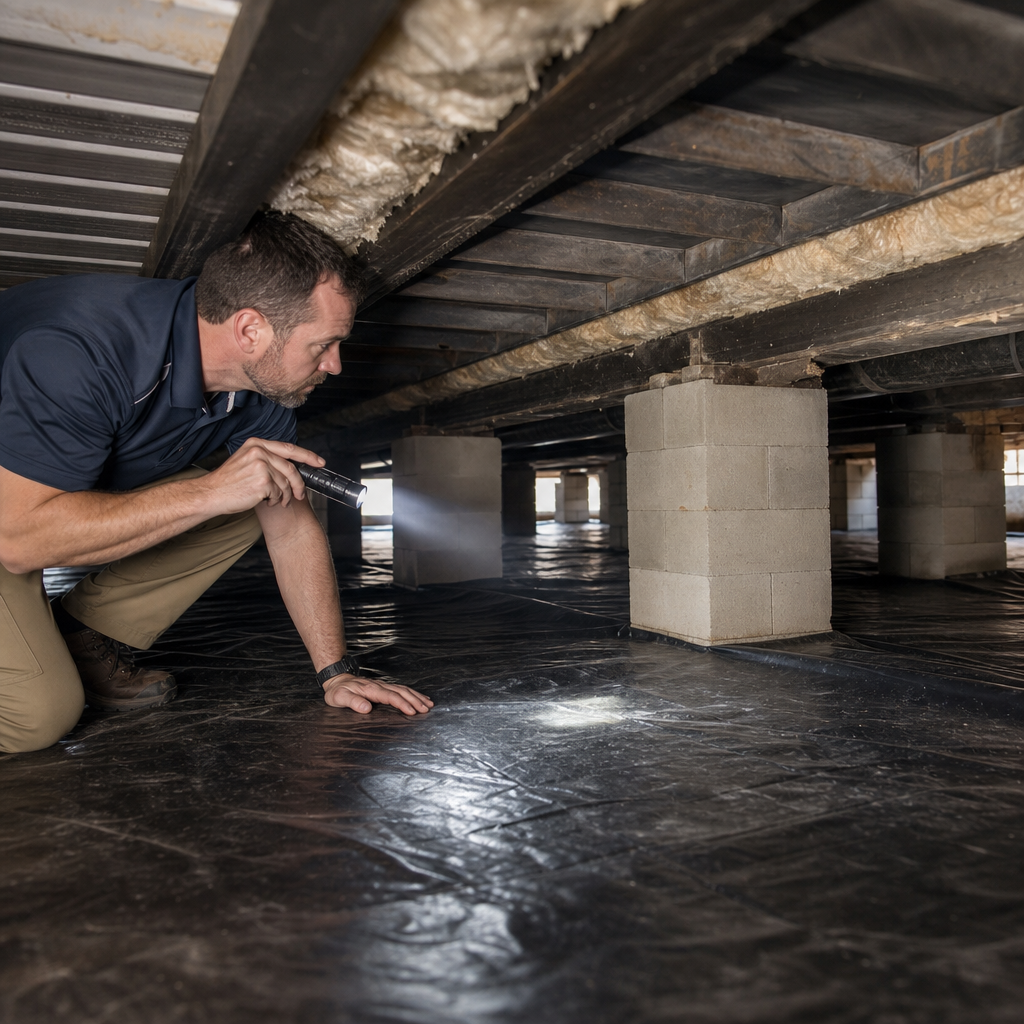
Inspect (free). Under the home, we count and map the anchors, check strap tension and corrosion, look for heaved or leaning anchor heads, and compare the system against what a Zone II home of your size should carry. You get a written rundown: what’s there, what’s slack, what’s missing, what it costs to fix.
Re-tension. The existing system is complete and sound. The straps just need to be brought back to spec. Fast, inexpensive, and automatic with any relevel or pier work, since changing the frame height changes strap tension by definition.
Replace components. Rusted straps, failed buckles, individual heaved anchors, swapped like-for-like with rated hardware, quoted per anchor.
Full install / retrofit ($600–$3,500). For homes with no system, a badly short count, or pre-1994 setups being brought up to Zone II reality. Soil-matched anchors (longer shafts, larger helixes, stabilizer plates for our sand) at correct spacing, new rated straps, tensioned to spec, documented. Price rides on anchor count, soil, and access; the pricing page has the full table.
The pre-season calendar, honestly
Hurricane season runs June through November, and demand follows it: pre-season inspections book heavily in late spring, and after any named storm brushes the Grand Strand the schedule fills with post-storm checks. If you already know your straps are slack, don’t wait for a June rush or a cone on the forecast map. The off-season is the easy time to get a retrofit scheduled, and if you’re also due for a relevel, one visit covers both.
One more honest note: parks, insurers, and lenders around Myrtle Beach increasingly ask for anchoring documentation, at sale especially. If a transaction is coming, fold this into a pre-sale leveling inspection and get the level, support, and tie-down answer in one written report.
Start with the free inspection
Tell us the home’s size, age if you know it, and where it sits, beach-adjacent in Surfside Beach, riverside near Conway, or anywhere on the Strand, and we’ll put eyes on the system. You’ll know exactly what’s holding your home down, what isn’t, and what it costs to fix, in writing, before you spend a dollar. Ahead of the season, the free inspection is the place to start: it’s the difference between paying for the affordable re-tension and buying a retrofit the home may not need.
Frequently Asked Questions
How much do mobile home tie-downs cost in Myrtle Beach?
A full anchor install or retrofit runs $600–$3,500 depending on how many anchors the home needs (roughly 14 to 26, scaling with the length of the home), soil conditions, and how much of the existing system is reusable. Re-tensioning existing straps is far cheaper and is bundled into every relevel we do. The inspection that tells you which you need is free.
What wind zone is Horry County for mobile homes?
HUD Wind Zone II, the entire county, along with the other eight coastal South Carolina counties. Homes sited here, and their anchoring systems, need to be rated for 100-mph winds. Homes built before HUD's July 1994 wind-standard update were built to a weaker standard, which is why anchor retrofits matter most on older units.
How do I know if my straps are too loose?
If your home has settled since they were installed, they're loose, straps are tensioned to the home at its original height, so any drop puts slack in the system. Visible signs: straps you can deflect easily by hand, rusted or missing straps, anchor heads heaved or leaning in the soil. A slack strap does close to nothing in a storm.
Do anchors work in sandy soil?
Yes, but the anchor has to match the soil. Loose, wet coastal sand takes longer anchors with larger helixes and usually stabilizer plates to stop lateral walking; a short anchor torqued into soft sand will pull through when it matters. Soil-matching the hardware is most of what separates a real installer from a hardware-store job.
When should I have tie-downs checked?
Before hurricane season is the smart calendar: June through November is the Atlantic season, and the pre-season weeks book fast. Any relevel is also automatically a strap check. And after any named storm passes through the Grand Strand, a quick re-tension check is cheap compared to finding out the hard way the next time.
More mobilehome services
- Mobile Home Leveling & Releveling in Myrtle Beach
- Pier & Pad Repair for Mobile Homes in Myrtle Beach
- Underbelly & Vapor Barrier Replacement in Myrtle Beach
- Belly Wrap & Underbelly Insulation Repair in Myrtle Beach
- Mobile Home Skirting Repair & Replacement in Myrtle Beach
- Pre-Sale Leveling Inspection for Mobile Homes in Myrtle Beach
- Under-Home Moisture & Drainage in Myrtle Beach
- Mobile Home Transport & Setup in Myrtle Beach and Horry County
- Utility Hookups for Newly Set Mobile Homes in Myrtle Beach
- Mobile Home Roof-Over and Roof Coating in Myrtle Beach